Rubbish removal real cost guide Islington
Posted on 21/10/2026
If you are trying to work out the real cost of rubbish removal in Islington, you are not alone. Quotes can look simple at first glance, then the extras start creeping in: labour, access, loading time, stair fees, parking, disposal charges. And suddenly the number is no longer simple at all.
This guide breaks it down in plain English. You will see what affects pricing, how the job is usually priced, what counts as fair value, and how to avoid the little surprises that make a tidy clearance feel oddly expensive. Truth be told, most people do not need a theory lesson. They need a realistic picture of what they might actually pay, and what they should ask before they book.
We will also cover local factors that matter in Islington, from tight streets and flat access to council rules and recycling expectations. If you want a broader view of the services available, our services overview is a useful place to start, but this article is built to help you judge costs properly first.
Why Rubbish removal real cost guide Islington Matters
Islington is one of those places where the job can look straightforward and then turn out to be anything but. Narrow roads, controlled parking, top-floor flats, basement conversions, shared hallways, awkward stairwells. You know the type. A quote that looks cheap on paper can become less appealing once the crew arrives and realises the access is tighter than expected.
That is why understanding the real cost matters. Not just the headline price, but the total cost of getting the waste out of your space, onto the truck, and disposed of properly. In a busy borough like Islington, the difference between a smooth clearance and a stressful one is often planning.
The guide matters for another reason too: rubbish removal is not all the same. A few bin bags from a garden tidy-up are very different from a full flat clearance after a move, or builders' waste after renovation. If you compare the jobs as though they are identical, you will probably compare the prices badly as well. A fair quote should reflect the reality of the load, not just the postcode.
There is also the trust side of it. People in a hurry sometimes accept a vague estimate, then find themselves dealing with add-ons they did not expect. A good pricing conversation should be clear. If it is not, that is a small warning sign. Not always a bad service, but worth slowing down for a minute.
Practical takeaway: in Islington, the cheapest-looking rubbish removal quote is not always the cheapest job. Access, labour, vehicle time, and disposal all affect the final bill, and those details matter more than people think.
How Rubbish removal real cost guide Islington Works
Most rubbish removal pricing in Islington is based on a mix of volume, type of waste, labour, and collection conditions. In simple terms, you are usually paying for how much space the waste takes up, how hard it is to move, and where it ends up.
Here is the basic flow. You describe the job, ideally with photos. The provider estimates the size and the likely handling required. Then they confirm whether the price includes loading, disposal, recycling, and any access-related work. If the job is honest and well-scoped, the quote should make sense before anyone arrives.
But the details matter. For example, a single sofa and a few boxes may be quick to remove from a ground-floor property. The same items from a fourth-floor flat with no lift, tight turns, and a parking challenge can take longer and cost more. It is still the same waste, but not the same job. And yes, the stairs always seem longer when somebody is carrying a wardrobe down them.
Some providers offer fixed prices for common load sizes. Others prefer a waste-and-labour estimate based on the van load or the amount of time needed. Both can work, provided the pricing is clear. If you are comparing options, the key question is not simply "what is the price?" It is "what exactly is included?"
For many households, local services like rubbish clearance in Islington or rubbish collection in Islington will be the most practical routes. If the job is specific, such as old chairs, a broken wardrobe, or mixed household junk, you may also want to look at furniture disposal or junk removal depending on what needs clearing.
Key Benefits and Practical Advantages
Understanding the real cost gives you more than just a number. It gives you control. And in a busy area like Islington, that can make a very real difference.
- Better budgeting: You can set a realistic figure for the clearance, whether it is a one-off declutter or part of a larger move.
- Fewer surprise charges: Clear quotes reduce the chance of add-ons appearing after the job begins.
- Faster decisions: Once you know what drives cost, it is easier to compare two or three providers without guessing.
- More suitable service choice: You can decide between a full clearance, a waste collection, skip hire, or a lighter removal service.
- Less stress on the day: If access, parking, and item size are discussed early, the collection usually feels calmer and more efficient.
Another overlooked benefit is waste reduction. A reputable provider will sort and divert material where possible rather than simply treating everything as general rubbish. If sustainability matters to you, that should be part of the decision, not a nice extra at the end. You can read more about the company's approach to recycling and sustainability if that is important in your booking.
There is also the time factor. A day spent trying to move heavy furniture, load a hired vehicle, and figure out disposal is a day many people would rather get back. To be fair, once you factor in hassle, clearance can look far more reasonable than it first appears.
Who This Is For and When It Makes Sense
This guide is for anyone who wants to clear waste in Islington without overpaying or underestimating the job. That could be a landlord preparing a flat between tenancies, a homeowner having a clear-out, a tenant moving out, a small business clearing office clutter, or someone handling the aftermath of a renovation.
It also makes sense if you are trying to decide between different disposal methods. Do you need a van crew to collect the waste? Would a skip be better? Is the load too small for skip hire but too awkward to take yourself? These are exactly the situations where cost clarity helps.
Some common scenarios:
- A loft clear-out after years of storage building up into "we'll sort it later" territory.
- Office furniture replacement where desks, chairs, and packaging all need moving at once.
- Garden waste after a big tidy-up, especially if the bags are bulky and wet.
- End-of-tenancy clearance where time is tight and the property must be left clean.
- Builders' waste after a kitchen or bathroom refurb, where rubble and offcuts add weight fast.
For heavier renovation waste, a specialist page such as builders' waste clearance in Islington may be more relevant. If the job is more domestic, house clearance, garage clearance, or loft clearance may fit better.
Step-by-Step Guidance
If you want a realistic price, the best approach is methodical. A little preparation goes a long way. And no, you do not need to measure every single broken chair with a tape measure like a nervous surveyor.
- List what needs removing. Separate furniture, bags, appliances, garden waste, and construction debris if possible.
- Estimate the volume. Think in terms of how much space the items will take in a van or truck. A few photos help a lot.
- Check access. Note stairs, lift access, parking, loading distance, and any tight turns or shared entrances.
- Ask what is included. Confirm labour, loading, disposal, recycling, and any minimum charge.
- Ask about restrictions. Some items need separate handling. Sofas, fridges, and rubble can be priced differently from standard household waste.
- Compare more than one quote. The best value is not always the lowest number. Compare scope, clarity, and responsiveness too.
- Book at a time that suits access. Early morning can sometimes be easier in busier streets, but that depends on the building and parking situation.
If your property has access limitations, it is worth reading about access problems for rubbish removal in N1. Small details like a locked gate or a long walk from the vehicle can change the whole shape of the quote. It sounds minor. It often is not.
One practical tip: send clear photos in daylight. Dim hallway snaps at 7am are not ideal, and the poor person pricing the job will probably have to squint a bit. Better photos usually mean a better estimate.
Expert Tips for Better Results
In our experience, the best rubbish removal bookings are the ones where the customer is slightly over-prepared, but not overcomplicated. A few small steps can save money and reduce stress.
- Sort waste before the quote if you can. Mixed loads are harder to price accurately than clearly separated items.
- Be honest about access. If the team has to carry waste down three narrow flights of stairs, say so early.
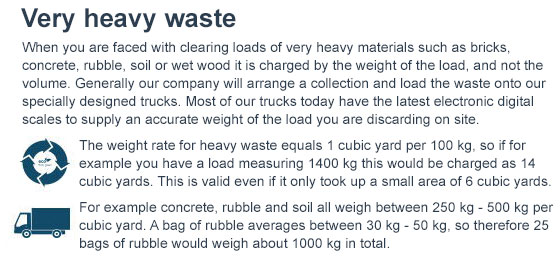
- Ask about weight as well as volume. Heavy loads can cost more than bulky but light items.
- Clarify whether the price is fixed or estimated. This is one of the simplest ways to avoid awkward surprises.
- Choose the right service for the waste type. Garden waste, furniture, office junk, and builders' debris are not always handled the same way.
- Keep pathways clear. A clear hallway or front path can speed things up more than most people realise.
A small but useful habit is to ask what happens if the load is slightly bigger than expected. A fair provider should explain the process clearly rather than making it sound mysterious. Nobody enjoys the "we'll see on the day" approach when money is involved.
If you want to compare broader service types, the waste removal in Islington page can help you understand how clearance differs from collection, while skip hire in Islington is useful if you are considering a different method entirely.

Common Mistakes to Avoid
There are a few easy mistakes that can make rubbish removal cost more than it should. None of them are dramatic. They are just the sort of things that lead to a longer day and a fatter invoice.
- Choosing on price alone: A very cheap quote can omit labour, disposal, or access charges.
- Underselling the size of the job: People often forget about bagged waste in cupboards, under beds, or in the loft.
- Ignoring parking and access: In Islington, this can be the difference between a simple pick-up and a difficult one.
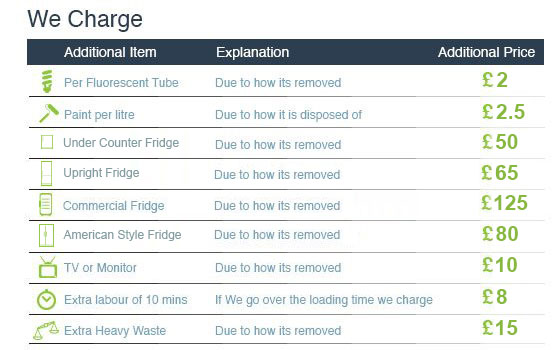
- Assuming all waste is priced the same: Heavy materials, awkward furniture, and electrical items may cost differently.
- Leaving booking too late: If you need a same-day collection, availability may be tighter and the options narrower.
- Not checking council-specific expectations: Bulk disposal and household waste rules can matter depending on what you are clearing.
There is a nice little lesson here: good preparation usually costs less than rushed decision-making. Strange, but true. It is often the last-minute jobs that become the expensive ones.
For more detail on local collection rules, see Islington Council rules for bulky waste collection and, if your building has permit issues or van access questions, guides to permits for vans and rubbish removal in Islington.
Tools, Resources and Recommendations
You do not need fancy tools to plan a rubbish removal job, but a few simple resources make the process easier.
- Phone camera: Take clear photos of the items, stairs, entrance, and parking setup.
- Rough room-by-room list: This helps you avoid forgetting items tucked away in cupboards or corners.
- Measurements for large items: A sofa, mattress, wardrobe, or fridge can affect vehicle planning.
- Building access notes: Lift size, door width, concierge restrictions, or timed entry can matter.
- Budget range: Decide what you are comfortable spending before you start comparing services.
It also helps to use the right service page when you are narrowing down the job. For instance, if you are clearing a workspace, office clearance may be more appropriate than general rubbish removal. If the issue is a small load of household items, rubbish collection may be enough. That sort of matching saves time.
If you want to learn more about the business side before booking, the pricing and quotes page is a helpful companion read. It can make the numbers feel less opaque, which is always welcome.
Law, Compliance, Standards, or Best Practice
Rubbish removal is not just about lifting and loading. There are practical standards and duties that good providers should respect, and customers should be aware of them too. The exact legal position can depend on the waste type, the location, and how the material is handled, so it is wise to be cautious rather than casual.
A reputable waste provider should be able to handle waste responsibly, transport it appropriately, and dispose of it through proper channels. That matters for environmental reasons, but also because poor handling can create problems for the property owner if the waste is fly-tipped or taken by an unlicensed operator. Nobody wants that headache.
Best practice usually includes:
- clear pricing and written confirmation where possible;
- safe loading methods, especially for heavy or awkward items;
- responsible sorting and recycling where suitable;
- careful handling of items that may contain sharp edges or electrical components;
- respect for access, parking, and shared building rules.
If you are booking clearance for a flat, extra care is sensible. Shared entrances, communal hallways, and neighbours mean the job should be done cleanly and with a bit of common sense. It sounds obvious, but in real life, obvious is not always what happens.
For confidence around safety and handling, you can also review insurance and safety. It is the kind of page people often skip until they need it. Then suddenly it feels quite important.
Options, Methods, or Comparison Table
Choosing the right disposal method can change the real cost dramatically. What looks cheapest upfront may not be cheapest overall once labour, time, parking, and disposal are included.
| Option | Best for | What affects cost | Watch out for |
|---|---|---|---|
| Rubbish removal team | Mixed household waste, bulky items, quick clearances | Volume, access, labour, waste type | Hidden charges if the job is poorly described |
| Skip hire | Longer projects, ongoing DIY, larger volumes | Skip size, permit needs, hire period | Space on the road or driveway may be limited |
| Self-load disposal | Small amounts if you have time and transport | Fuel, time, access, tipping fees | Heavy lifting, multiple trips, disposal complexity |
| Specialist clearance | Lofts, garages, offices, builders' waste | Item type, weight, site conditions | Not all firms handle every waste stream |
As a rough decision rule, if the waste is awkward, heavy, or spread through a property, a removal team is often more practical. If it is a longer renovation with a steady stream of waste, skip hire can make sense. If the load is tiny and you have the time, self-load may be enough. Easy in theory. Slightly messier in practice, as you might expect.
If you are still unsure, a focused service page like house clearance in Islington or furniture disposal in Islington can help you narrow down the best fit.
Case Study or Real-World Example
Picture a typical Islington flat move-out. There are a few bags of general waste, an old sofa, a coffee table, some broken shelving, and a pile of packaging from a recent upgrade. Nothing outrageous. But the flat is up two flights of stairs, the road is busy, and parking is tight around lunch time.
A resident who only thinks in terms of item count might assume this is a small job. In reality, the access makes it more involved. The labour time is longer, the loading is slower, and the team may need to plan around parking or waiting time. That does not mean the job becomes expensive for no reason. It means the cost reflects the work involved.
Now compare that to a ground-floor property with a front entrance close to the vehicle. Same sofa, same table, same bags. Different effort. Different pricing. That is why photos and a clear description matter so much. They save guesswork on both sides.
A small but very real lesson from jobs like this: the quote that is detailed and slightly higher can often be the better value. You are paying for certainty, not just muscle. And certainty is worth something when you are trying to get a property back into shape.
Practical Checklist
Use this before you book. It keeps the process tidy and, frankly, stops a lot of avoidable back-and-forth.
- Have you listed everything that needs removing?
- Do you know whether the waste is household, garden, furniture, office, or builders' waste?
- Have you taken clear photos from more than one angle?
- Have you noted stairs, lift access, parking, and distance from the property to the vehicle?
- Have you asked what the quote includes?
- Do you know whether the price is fixed or estimated?
- Have you checked whether any items need special handling?
- Have you compared at least two quotes if time allows?
- Have you confirmed the collection time and access arrangements?
- Have you checked whether the service matches the type of job you actually need?
That is the whole game, really. A clear list, a clear description, and a clear quote. Not glamorous, but effective.
Get a free quote today and see how much you can save.
Conclusion
The real cost of rubbish removal in Islington depends on more than the amount of waste. Access, labour, item type, disposal needs, and timing all play a part. Once you understand those moving pieces, the pricing starts to make a lot more sense.
That is the main point of this guide: not to chase the lowest number, but to help you judge value properly. A well-scoped job, a clear quote, and a service that understands local conditions will nearly always give you a better experience than a vague bargain with hidden strings attached.
If you are planning a clearance soon, take a moment to gather a few photos, make a quick list, and compare your options calmly. You will feel the difference. And once the clutter is gone, the room always seems bigger, brighter, and a bit more breathing again.
Sometimes that is all you need - a clear plan, a fair price, and a clean start.


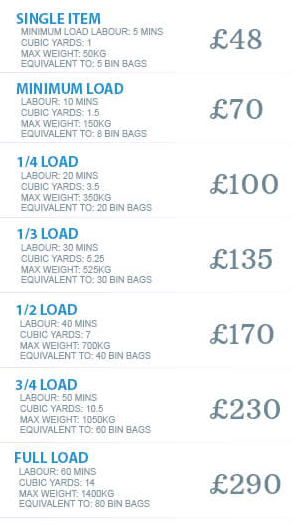
 Tipper Van - Rubbish Removal and Junk Collection Prices in Islington N1
 Luton Van - Household Waѕte & Green Waѕte Removal Prices