Rubbish Removal in Islington for homes, offices and bulky waste
Rubbish Removal Islington provides rubbish removal in Islington for customers who need household, office, garden or trade waste taken away in a practical, straightforward way. The service is built around removing unwanted items, loading them safely and dealing with them through the right disposal route, so customers can clear space without managing the heavy lifting themselves. It is a useful option when bins are full, items are too large for ordinary collection, or a property needs a tidy and complete clear-out.
Our work can cover single bulky items as well as fuller clearances, depending on what needs moving and how much access is available. Common jobs include furniture disposal, garage contents, loft items, office furniture and general mixed rubbish. If you are planning a clearance in stages, our services overview explains how the different types of work fit together, while this page gives a clear starting point for requesting the right help.
For many customers, the main aim is to keep the process simple. If you already know roughly what needs to go, a short list is enough to begin with; if the job is more complex, a few notes about access, floor level and item size help shape the arrangement. When you are ready, ask for a quotation and we can discuss the most suitable approach for the clearance.
Household rubbish clearance and bulky items
Household rubbish clearance is often about removing items that are awkward to store, difficult to carry or too numerous for regular waste collection. That may include broken furniture, bagged waste, old appliances, mattress removals or mixed clutter from a room that has become difficult to use. A focused clearance keeps the task practical: the aim is to lift, sort and remove the items in a way that suits the property and the type of waste involved.
Bulky items need a different approach from loose rubbish because they can be heavy, large or difficult to move through tight spaces. Sofas, wardrobes, tables and similar pieces often need careful handling to avoid damage to walls, floors and stairwells. If your priority is to dispose of a single large item rather than clear a whole room, that can still be arranged as part of the same service. Furniture disposal in Islington is a useful option when the main task is getting rid of larger domestic pieces cleanly and sensibly.
When planning a household clearance, it helps to separate items that must be removed from anything you want to keep. That keeps the work focused and avoids confusion on site. Photographs can be useful when the job includes several rooms, especially if there are stairs or narrow access points. Clear access is always helpful, but the work can still be planned around real property constraints rather than ideal conditions. If you need to dispose of mixed items from one home, our team can organise the work around what is actually there, not a standardised checklist.
Office clearance, furniture disposal and work premises
Office clearance is best approached as a structured removal rather than a simple tidy-up. Desks, chairs, filing cabinets, shelving, monitors and mixed office waste can all need to be moved in a careful sequence, particularly where other businesses are still operating nearby. The practical goal is to reduce disruption while clearing the items that are no longer needed, whether the job involves one room, a floor of desks or a fuller changeover of workspace furniture.
For commercial premises, timing and access often matter as much as the amount of waste. Lift availability, loading arrangements, corridors and shared entrances can shape how the clearance is carried out. If the work includes a business move, refurbishment or downsizing, it can help to look at the office clearance page alongside the main service pages so you can match the job to the kind of items involved. Where the clearance includes office furniture that is still structurally sound, there may be a different handling pattern from mixed rubbish or damaged equipment.
Commercial customers often want an arrangement that is clear and efficient rather than overcomplicated. A simple list of what stays and what goes is usually the most useful starting point, especially when several people are involved in the decision. If the job includes archived paper, storage cupboards or older equipment, it is worth noting those items separately so the clearance can be planned around them. Practical planning matters most where access is shared or working hours are limited.
Garden waste, garage contents and outdoor clearances
Garden waste removal is suitable for customers who need branches, hedge cuttings, soil, turf, pots, broken outdoor furniture or other outdoor debris taken away after maintenance or landscaping work. Garden waste often arrives in mixed form, so the service needs to handle both loose green material and heavier items such as planters or collapsed structures. The point is to move the waste out efficiently and leave the area ready for whatever comes next, whether that is further gardening, repair work or simply a clearer outdoor space.
Garage clearances are different again because garages tend to hold a mixture of storage, tools, old household items and occasional trade materials. They can become difficult to sort without taking everything into account first. A garage job may therefore involve general rubbish, broken equipment, boxes, old sports items and pieces that have been kept for years but are no longer useful. Garage clearance in Islington is a sensible place to look when the whole space needs to be emptied or reorganised, rather than just a single item collected.
Outdoor clearances are often easiest when the waste is grouped before removal, but that does not mean the job must be perfectly sorted. The right arrangement depends on the type of items and how accessible they are from the garden, driveway or side entrance. When there is a mixture of green waste and hard materials, describing the main categories is more useful than trying to itemise everything. That gives a better basis for a quotation and helps keep the service properly matched to the load.
Lofts, storage areas and harder-to-reach rubbish
Loft clearance is often required when a property has built up years of stored items, seasonal belongings or objects that were put away temporarily and never revisited. These spaces can be awkward because access is limited, headroom may be low and items may be dusty, fragile or unevenly stacked. A careful loft clearance needs patience as well as lifting work, because the important thing is to remove the unwanted contents without causing avoidable disturbance to the rest of the property.
Storage areas tend to accumulate a mixture of usable and unusable items, so it helps to think in categories rather than vague piles. For example, some things may be personal keepsakes, some may be recyclable materials and some may be simple rubbish. Loft clearance in Islington is relevant where the aim is to empty or reduce a crowded upper storage area and make the space safe to use again. In practice, the job is often about handling the awkward access just as much as the waste itself.
If you are preparing a loft or similar space for removal, it is useful to keep one side of the access route clear and separate anything that should remain in the property. Good sorting at the start can save confusion later, especially where boxes have been stacked for a long time. Items that are light but bulky may need different handling from compact heavy objects, so describing the contents honestly gives a better basis for planning the work and setting expectations.
About Islington
Islington is a borough in North London with a long history that is visible in its street pattern, housing stock and public spaces. The area developed from a rural village into a densely built part of the capital, and traces of that change remain in the mix of Georgian terraces, later mansion blocks, converted commercial buildings and modern infill. Upper Street is one of the best-known routes, with shops, restaurants and theatres that reflect the district’s busy urban character. Nearby, the historic fields of Barnsbury and Canonbury show how residential development has sat alongside conservation concerns for many decades. The borough also includes Regent’s Canal, which forms part of a wider transport and leisure corridor across London and gives the area a distinctive waterside dimension. Green spaces such as Highbury Fields and smaller local gardens provide contrast with the denser streets around them. Cultural life is a strong feature too, with venues, libraries, cinemas and community spaces supporting a varied local identity. The area’s architecture ranges from formal squares and terraces to more utilitarian post-war buildings, creating a layered streetscape that reveals different periods of London growth. This mixture of older and newer fabric makes Islington visually diverse without losing a clear sense of place. Its location, close to central London yet distinct in character, has helped it remain one of the capital’s most recognisable inner boroughs.
Builders’ waste, renovation debris and mixed site rubbish
Builders’ waste clearance is designed for renovation leftovers, stripped-out materials and the mixed debris that often appears after refurbishment or property maintenance. That can include wood offcuts, packaging, broken fixtures, plasterboard-type waste, old fittings and other material that is not suited to standard household disposal. The important point is to deal with the rubbish in a controlled way so that the work area can move on to the next stage without being cluttered by waste.
Site rubbish is often mixed, and that is what makes it different from a single-category collection. Renovation work may leave a blend of light and heavy items, some recyclable materials and some awkward pieces that need careful lifting. If you are looking for a focused service for trade or refurbishment debris, builders’ waste clearance in Islington is the relevant page to use. It gives a clear indication of the type of material the service is intended to handle.
For this kind of work, access and the stage of the project matter. It is easier to clear waste when it has been gathered in one place, but the service can still be planned around an active building environment. Tell us what the material is, where it is stored and whether any items are particularly heavy or awkward. That information supports a more accurate quotation and helps the team approach the job with the right equipment and sequence.
Prices, quotes and what affects the cost
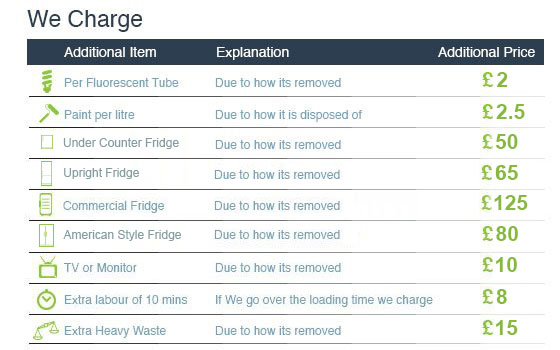
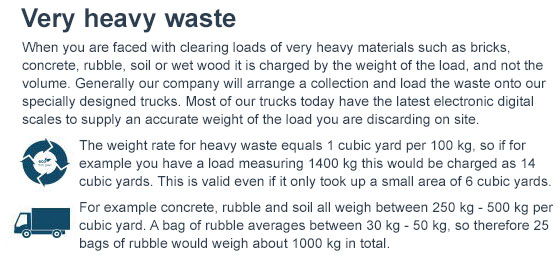
Pricing for rubbish removal depends on the waste type, the amount to be removed, how easy it is to access, and whether the job includes items that need special handling. A small collection of loose rubbish is not the same as a full property clearance, and a ground-floor load is not the same as carrying bulky items from an upper floor. Clear pricing works best when the job is described in practical terms rather than vague estimates of how much space it might take up.
The most useful details are usually the type of waste, the approximate quantity, the location within the property and any access limitations such as stairways, narrow halls or shared entrances. If you are comparing options, the prices page and the pricing and quotes page are both relevant starting points. They help customers think about how the job is assessed and what information is needed to prepare a proper quotation.
For best results, keep the description honest and specific. A short note that says whether the load is mostly furniture, garden waste or mixed rubbish is often more helpful than a long explanation that leaves the main details unclear. If there are fragile items, restricted parking, basement access or shared areas, mention those too. Accurate information makes it easier to match the service to the work and reduces the chance of misunderstanding.
How to prepare a request and choose the right clearance
When requesting a quotation, it helps to group the waste by area or by type so the job can be understood quickly. You do not need to make the site perfect, but a little preparation can make the process smoother. If possible, identify any items that must stay, any items that need extra care and any access features that could affect removal. This is especially useful for properties with stairs, shared entrances or storage spaces where space is limited.
There are several service pages that can help you choose the most relevant clearance before you send an enquiry. For example, rubbish clearance in Islington covers a broad general option, while waste removal in Islington suits customers who want a wider overview of the removal service. If the job involves mixed household items, offices or larger furniture pieces, it may help to compare those pages against the specific content of the work.
Request a quotation once you know the main category of waste and the practical access details. A clear description is usually enough to begin a discussion, and it gives the service the best chance of matching the right approach to the work. If you are still deciding between options, reading the relevant service page first can make the choice much simpler. For a final step, contact us for a quotation and tell us what needs to go.
Collection options, removal decisions and a simple next step
Different clearances suit different needs, which is why it helps to think about the scale and type of work before arranging removal. Some customers only need a one-off pick-up of bulky items, while others need a fuller property clearance with several rooms or mixed categories of waste. The most practical choice is usually the one that matches the contents, the access and the deadline without adding unnecessary complexity.
If you are still weighing up the best route, related service pages can help narrow the options. House clearance in Islington is useful for larger domestic jobs, while the junk removal page suits mixed items that do not fit neatly into a single category. For outdoor or overflow waste, the garden and garage pages may be more appropriate. Choosing the right page is mainly about identifying the kind of waste you have rather than forcing it into a generic label.
Once the main category is clear, the remaining step is straightforward. Give a brief description, mention any access issues and say whether the work is urgent or can be scheduled more flexibly. Short, accurate details are enough to start the process. If you would like to move ahead, contact us to request a quotation and we can take it from there.

Builders Waste Clearance
Read more

Garden Waste Removal
Read more

House Clearance
Read more

Office Clearance
Read more

Rubbish Clearance
Read more

Waste Removal
Read more

Furniture Disposal
Read more

Garage Clearance
Read more

Loft Clearance
Read more

Junk Removal
Read more

Skip Hire
Read more

Rubbish Collection
Read more
Frequently Asked Questions


Prices
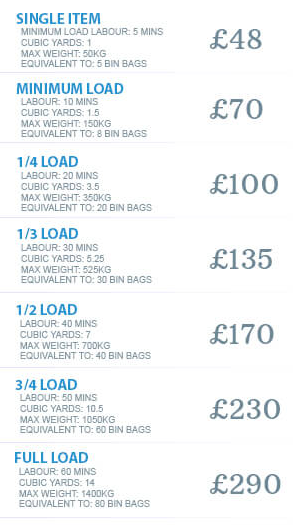
Excellent Prices on Rubbish Removal Islington N1
You can count on the best rubbish disposal Islington company in N1 to make your rubbish disappear in no time! Just call us today and get a free quote!
 Tipper Van - Rubbish Removal and Junk Collection Prices in Islington N1
| Space іn the van | Loadіng Time | Cubіc Yardѕ | Max Weight | Equivalent to: | Prіce (incl tax)* |
| Minimum Load | 10 min | 1.5 | 100-150 kg | 8 bin bags | £90 |
| 1/4 Load | 20 min | 3.5 | 200-250 kg | 20 bin bags | £160 |
| 1/2 Load | 40 min | 7 | 500-600kg | 40 bin bags | £250 |
| 3/4 Load | 50 min | 10 | 700-800 kg | 60 bin bags | £330 |
| Full Load | 60 min | 14 | 900-1100kg | 80 bin bags | £490 |
*Our rubbish removal prіces are baѕed on the VOLUME and the WEІGHT of the waste for collection.
 Luton Van - Household Waѕte & Green Waѕte Removal Prices
| Space іn the van | Loadіng Time | Cubіc Yardѕ | Max Weight | Equivalent to: | Prіce (incl tax)* |
| Minimum Load | 10 min | 1.5 | 100-150 kg | 8 bin bags | £90 |
| 1/4 Load | 40 min | 7 | 400-500 kg | 40 bin bags | £250 |
| 1/2 Load | 60 min | 12 | 900-1000kg | 80 bin bags | £370 |
| 3/4 Load | 90 min | 18 | 1400-1500 kg | 100 bin bags | £550 |
| Full Load | 120 min | 24 | 1800 - 2000kg | 120 bin bags | £670 |
*Our rubbish removal prіces are baѕed on the VOLUME and the WEІGHT of the waste for collection.
What Our Customers Say

 (71)
(71)
Contact us
Opening Hours: Monday to Sunday, 08:00-23:00
Postal code: N1 7AD
City: Islington
Country: United Kingdom
Web: https://rubbishremovalislington.org.uk/
Description: Commercial rubbish removal in Islington for homes, offices and bulky waste. Clear, practical service information with useful pages for prices, services and quotations.
Sitemap